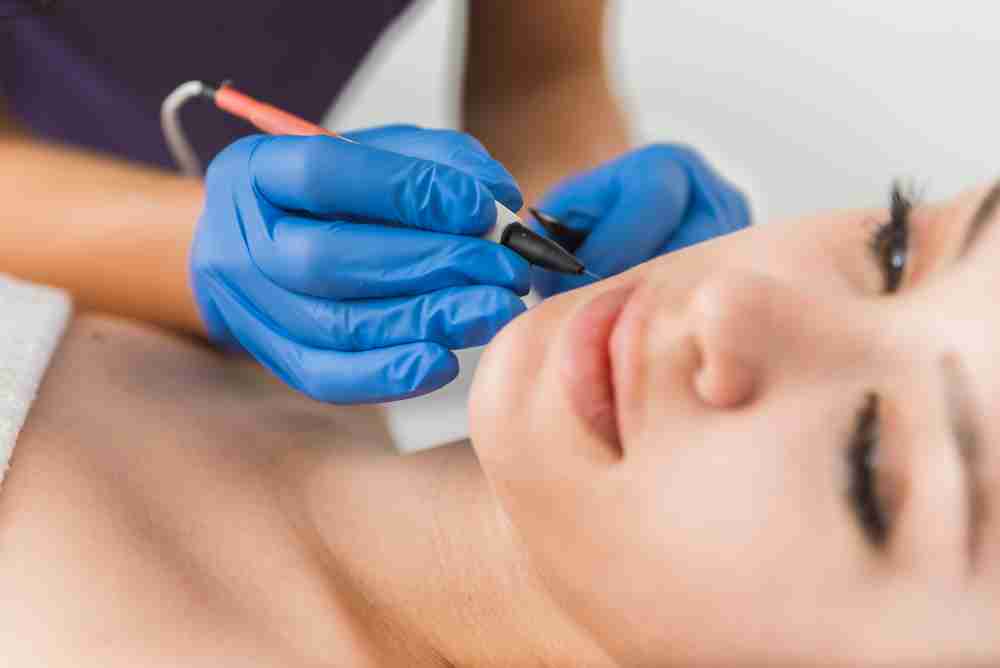
Not everyone’s skin responds to electrolysis permanent hair removal treatment the same way. It is also important to consider that different body and facial regions have different levels of sensitivity. Specifically, since facial skin is thinner and more sensitive compared to many body regions , understanding what your skin needs after electrolysis treatment makes the whole process easier to get through.
Electrolysis on Facial Regions: What to Know
Women considering multi-probe electrolysis for unwanted hair removal will find that sharing a clear picture of their skin with the electrologist beforehand makes a real difference to how aftercare is approached.
The face is more exposed than almost any other body part, and several factors shape its response after electrolysis permanent hair removal treatment:
- Current prescription medication, retinoids, exfoliating acids, or recent peels can increase reactivity around the time of a session
- Some medical conditions, as well as rosacea-prone or acne-prone skin, which may affect how the face heals
- Recent sunburn, active breakouts, or broken skin all influence whether treatment should proceed or be timed differently
- Hormonal shifts during perimenopause and beyond can change how the skin behaves day to day
The Australian Government’s perimenopause and menopause guidance lists dry or itchy skin among the physical symptoms of the menopausal transition, which is worth factoring in for women in this age group who may find their skin behaving differently. However, it is important to note that none of these considerations definitively rule out electrolysis permanent hair removal treatment. They simply help your electrologist tailor timing and aftercare advice to get the best outcome.
What Happens to the Skin During and After Electrolysis Treatment
Electrolysis permanent hair removal involves inserting an ultra-thin probe into the base of the hair follicle, where a small electrical current triggers a chemical reaction that destroys the stem cells responsible for new hair growth. On the face, where follicles sit closer together and changes show up quickly, knowing what normal post-electrolysis recovery looks like helps avoid unnecessary concern.
Mild tingling or stinging during the electrolysis treatment session is common. Afterwards, the treated area may look red, feel warm, or develop some local swelling. These effects usually settle within a couple of hours, though they can take a little longer depending on the area and individual skin response.
Keeping Electrolysis Aftercare Simple
The instinct after an electrolysis treatment on facial skin regions is often to reach for something soothing. In reality, a lighter approach tends to work better:
- A cool compress eases warmth or swelling without rubbing the treated area
- A fragrance-free, gentle cleanser keeps the face clean once the skin is ready
- Avoiding exercise, saunas, and steam for the first day limits unnecessary heat around treated follicles
- Minimal touching and clean hands reduce the risk of irritating the area
- Sun protection matters once the skin has settled, particularly for anyone prone to dark marks after inflammation
In addition, it is important to avoid applying heavy or occlusive make-up immediately after your electrolysis permanent hair removal session.
Medication and Timing After Electrolysis
Using retinoids and exfoliating acids are useful parts of many skincare routines, and using them does not automatically prevent electrolysis permanent hair removal treatment. What matters is disclosure and timing. Anyone on isotretinoin or other prescription skin treatments should discuss timing with both their prescriber and electrologist before proceeding.
Note: It is important to consult your healthcare practitioner before stopping any prescribed medicine.
What to Watch For Between Electrolysis Sessions
Tiny scabs can occasionally form over treated follicles as the skin heals following electrolysis permanent hair removal. They should be left alone in order for the skin to heal properly. Picking them prolongs inflammation and increases the chance of marks or infection. If skin redness worsens, spreads, or is accompanied by heat or pus, it is crucial to seek professional advice rather than continuing with home care.
Multiple electrolysis permanent hair appointments are needed because hair grows at different times within its natural cycles. Gentle, consistent electrolysis aftercare between sessions gives the skin the best conditions to recover comfortably and keep the permanent hair removal treatment plan moving forward.
